What Happened to Good Men?
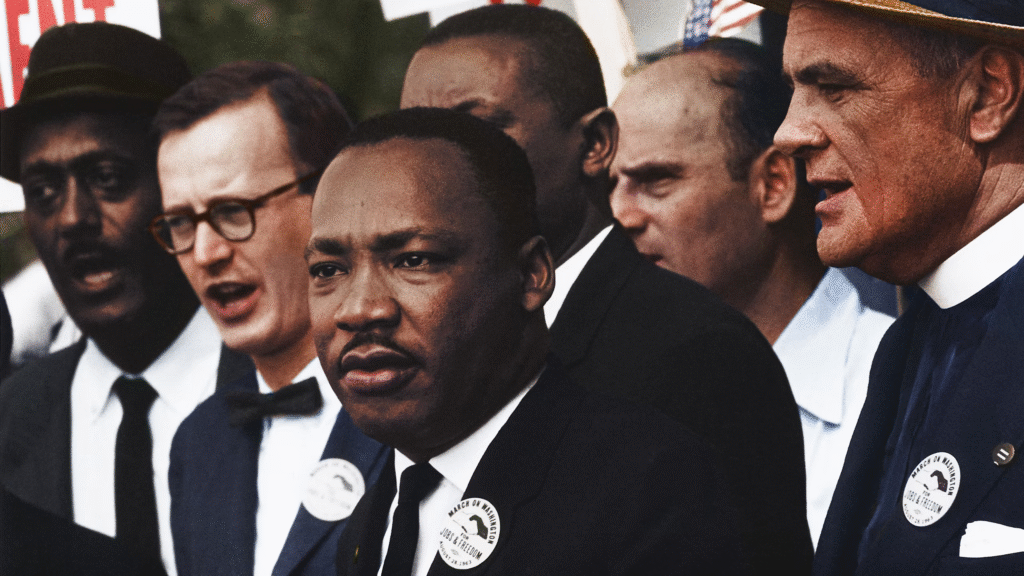
The idea of the “Good Man” doesn’t seem to carry much weight these days. It’s not a phrase you often hear used to describe someone’s best qualities. Yet in living memory, it was shorthand for the most respected kind of man – a person of principle, character, and contribution. Men like Desmond Tutu, Paul Newman, Martin Luther King Jr., Nelson Mandela, and Australia’s own Fred Hollows were seen as aspirational not because they dominated, but because they stood for something. Men whose values were as evident as their actions.
So why does it feel like the idea of the good man has faded from view? What happened to good men?
One reason is that the traditional scaffolding of masculinity has undergone a radical transformation. For much of the 20th century, male identity was defined by clear, if rigid, roles: the provider, the protector, the stoic leader. These roles were reinforced through family structures, religious teachings, economic expectations, and social institutions.¹ But across the 20th and 21st centuries, seismic shifts in global economies, family dynamics, workforce participation, and social values have reshaped those expectations.²
Today, men are encouraged to be emotionally open and vulnerable – yet still penalised for showing perceived weakness, especially in social or professional contexts.³ They’re expected to maintain traditional responsibilities; strength, provision, resilience, while also demonstrating emotional intelligence, empathy, and gentleness. It’s not surprising that many feel caught between two incompatible models. And when a man inevitably falls short of one expectation while meeting another, the outcome is often criticism, not support.
The portrayal of men in modern media hasn’t helped. Too often, it swings between extremes: the emotionally vacant alpha or the clueless, passive fool.⁴ Rarely do we see male characters who embody quiet strength, moral courage, or emotional maturity, at least not without irony or critique. When we do elevate men in public life, it’s usually because of physical dominance, material success, or online notoriety. Billionaires, athletes, influencers, our culture’s loudest signals about male value often centre on winning, not character.
Compounding this is the steady retreat of religious institutions from public life. For generations, religion, regardless of denomination, provided men with a common moral compass. It taught values like humility, accountability, sacrifice, and service. Rites of passage and community belonging offered structure and meaning.⁵ Now, in increasingly secular societies like Australia, the UK, and the US, those guiding frameworks have largely disappeared.⁶ This absence doesn’t mean men are less capable of being good – it means the cultural scaffolding that once helped shape and support goodness is no longer widely present. And while I’m certainly not proposing a return to rigid dogma, the broader conversation about masculinity may benefit from revisiting the value of shared moral anchors, wherever they may come from.
These struggles ripple outward, affecting not only the men experiencing them, but also their partners, children, and broader communities. The emotional and relational health of families is closely connected to the stability and wellbeing of all their members, including men. When men become disconnected, isolated, or unwell, the impact is collective.⁷ These ripple effects are far-reaching and deeply human.
And yet, as the world grapples with vast, existential challenges, from geopolitical instability to the climate crisis, this moment also presents a profound opportunity. If we are to build a future that is sustainable, just, and compassionate, we will need men who are not just competent, but also deeply principled. Men who lead with integrity, not ego. Who serve, not dominate. Who leave the world better than they found it.
Within this crisis lies a rare opportunity. As old models collapse and new ones emerge, we have the chance to reimagine what healthy, value-driven masculinity can look like – not by retreating to the past, but by forging a path that is more grounded, inclusive, and purpose-driven.
In future posts, I want to explore this opportunity, not as a return to outdated ideals, but as a forward-looking movement grounded in purpose, integrity, and shared strength.
It’s time to ask: not just what happened to good men, but what could happen if we redefined what it means to be one?
References:
-
- Farrell, W. (1993). The Myth of Male Power. Simon & Schuster.
- McDowell, J. (2020). Masculinity in Transition: Social Trends and Changing Expectations. Journal of Sociology.
- Seidler, V. (2006). Transforming Masculinities: Men, Cultures, Bodies, Power, Sex and Love. Routledge.
- Katz, J. (2016). Tough Guise 2: Violence, Media & the Crisis in Masculinity. Media Education Foundation.
- Farrell, W. (1993). The Myth of Male Power.
- Australian Bureau of Statistics (2022). Religious Affiliation in Australia, 2021 Census. & Pew Research Center (2019). In U.S., Decline of Christianity Continues at Rapid Pace.
- AIHW (2022). Deaths by suicide among males. Australian Institute of Health and Welfare. & ABS (2021). Causes of Death, Australia.